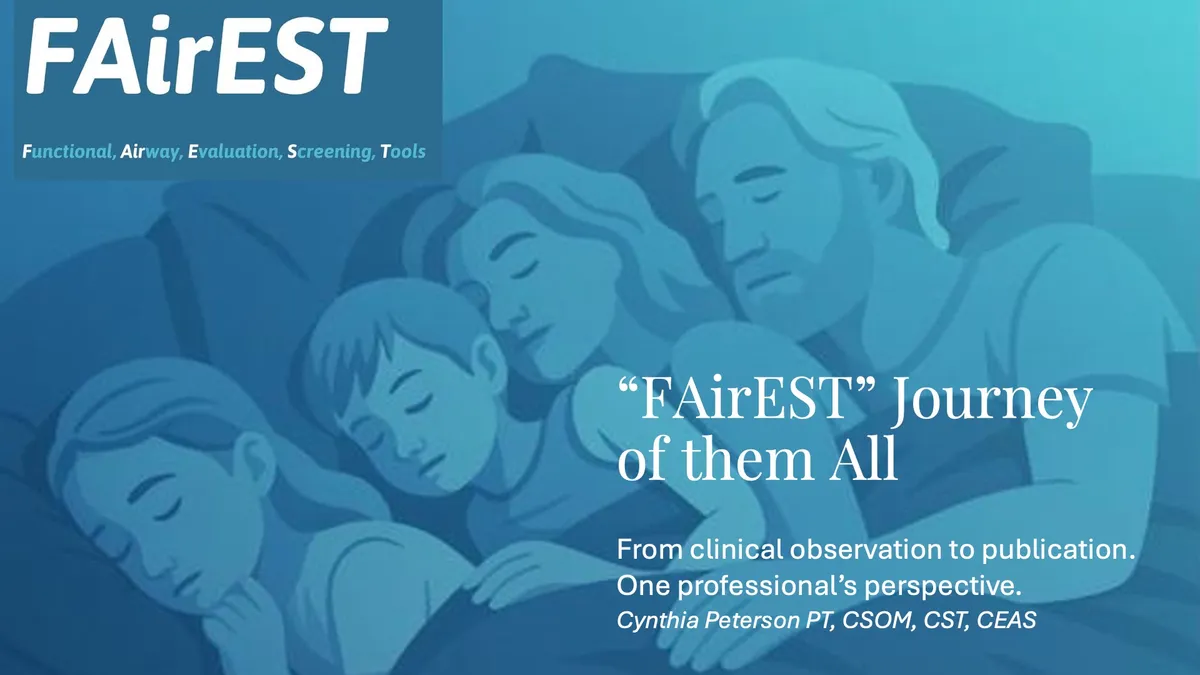
The FAirEST Journey: From Clinical Observation to Published Research
A 58-minute presentation about the origin and publication of FAirEST 21
by Cynthia Peterson, PT, CSOM, CST, CEAS
Recorded for the Airway Circle, October 2026
You see patterns your colleagues don't. Here's how to turn them into evidence.
You notice things in clients every day: open-mouth posture, a strained chin, a tongue that can't lift to the palate. You know these patterns matter long before a diagnosis arrives. But you may have no idea how to get from "I keep seeing this" to a validated, published finding that other professionals will trust and use.
The problem: Research can feel closed to practicing clinicians. Ethics review, team agreements, authorship, hidden costs and years of unpaid work stop good observations before they ever become data. That leaves clinicians frustrated and patients waiting, especially children, women and minorities, who are underrepresented in the research.
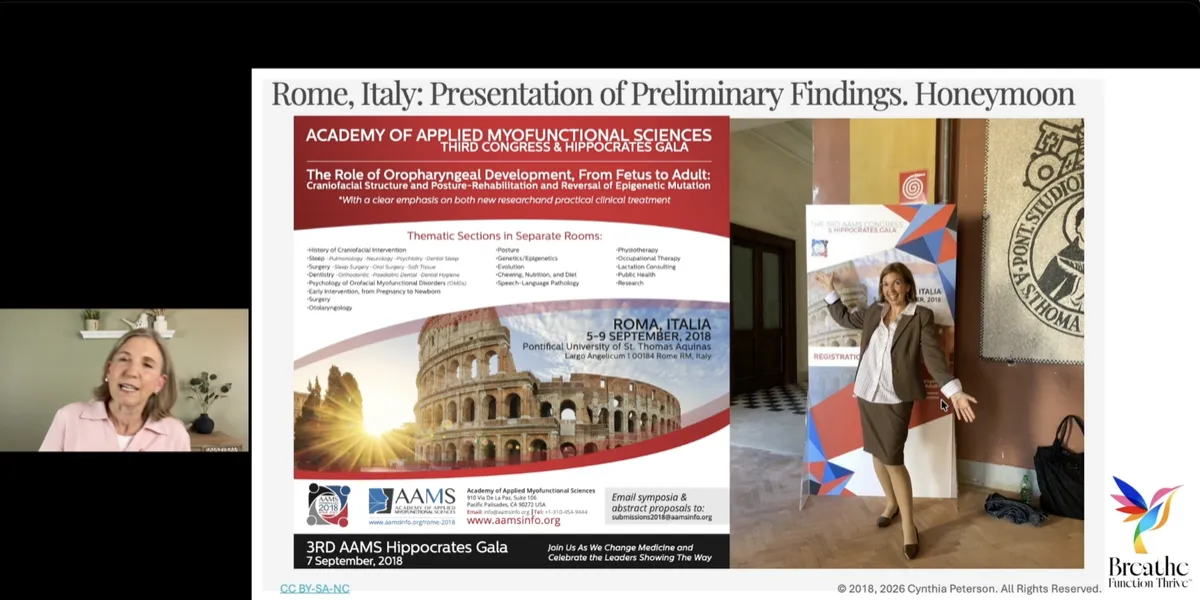
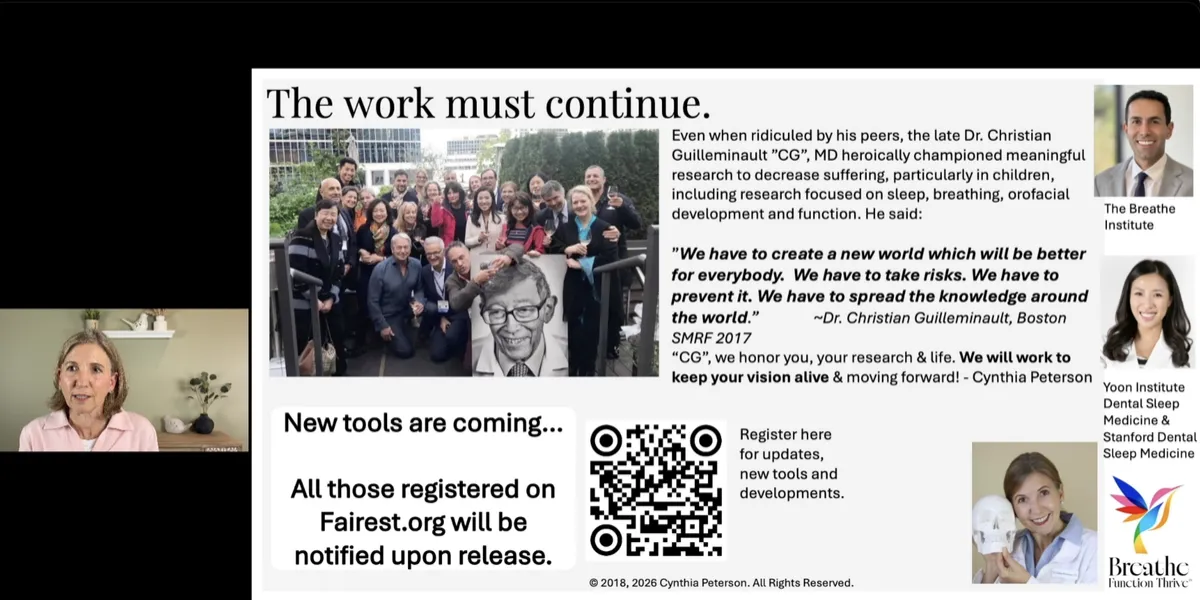
Learn from a clinician who has made that journey
Cynthia started out as an overwhelmed new PT in 1990. She went on to create FAirEST, a picture-based airway screening tool, and helped take it all the way to peer-reviewed publication:
A 21-item study screening 665 subjects, run by 12 researchers in 4 countries
Published research on lip-taping, FAirEST 6 and TRMR-LPS, which took more than 20 years from first clinical question to publication.
The AAMS Rising Star Investigator Award(2019) and The Breathe Institute's Breathe Outlook Award (2022)
What you'll take away
The real path from hypothesis to publication: IRB review, human-subjects training, confounder screening and multidisciplinary teamwork.
The hidden costs of research, and how to budget for time, ethics fees, graphics and publication before you begin.
Six lessons Cynthia would tell her younger self, including how to record your observations, agree on roles and authorship in writing, and protect your intellectual property.
A walkthrough of the FAirEST assessments, with credits for who contributed each part of the tool and the research behind it.
Don't let your observations go unrecorded! Without a plan, valuable clinical insight stays in one treatment room and never reaches the children and adults who need earlier identification. With one, your questions can become tools that raise the standard of care across dentistry, medicine, myofunctional therapy, PT, SLP and more.